



Table of Contents
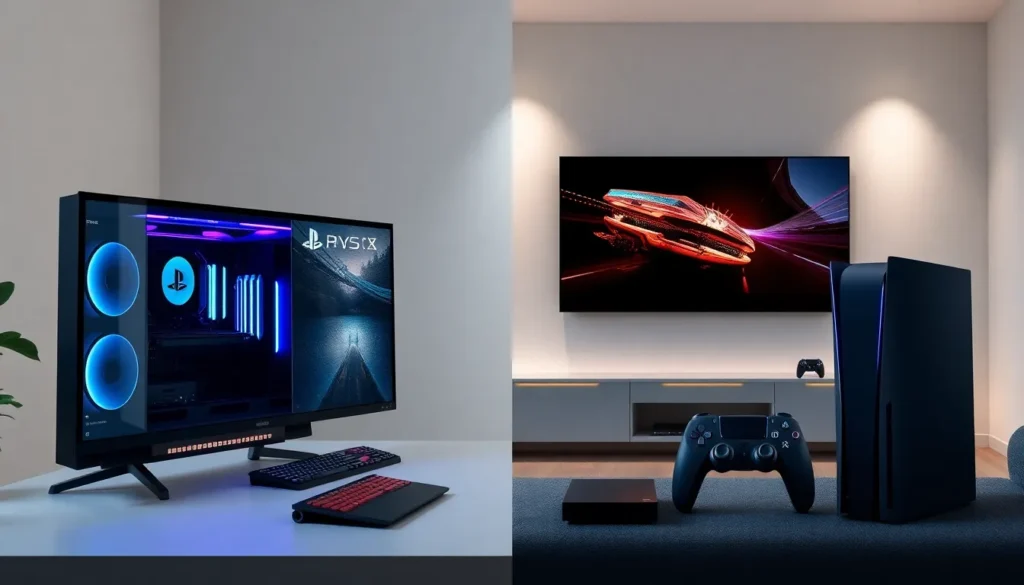
TogglePC gaming vs console gaming remains one of the most debated topics among gamers. Both platforms offer distinct advantages and drawbacks. Choosing between them depends on personal priorities like budget, performance needs, and gaming preferences. This guide breaks down the key differences between PC gaming and console gaming. It covers performance, cost, game libraries, and customization options. By the end, readers will have a clear understanding of which platform suits their gaming lifestyle.
Key Takeaways
- PC gaming delivers superior performance with higher frame rates, resolutions, and advanced features like ray tracing compared to consoles.
- Consoles offer a lower upfront cost around $500, while a capable gaming PC starts at $800 to $1,000 or more.
- PC gaming saves money long-term through free online multiplayer and steeper game discounts on platforms like Steam.
- The PC gaming vs console debate shifts as more PlayStation and Xbox exclusives become available on PC.
- PCs allow hardware upgrades and extensive game modding, extending both system lifespan and game replayability.
- Consoles provide plug-and-play simplicity, making them ideal for gamers who prefer convenience over customization.
Performance and Graphics Capabilities
Performance is often the first battleground in the PC gaming vs console debate. Gaming PCs can deliver superior frame rates, higher resolutions, and better visual fidelity. A high-end PC with a modern GPU can push games at 4K resolution with 120+ frames per second. Consoles like the PlayStation 5 and Xbox Series X offer impressive specs but typically cap at 60 fps for most titles.
PC gaming hardware ranges from budget builds to extreme setups. This flexibility means players can match their hardware to their performance expectations. A mid-range gaming PC often outperforms current-generation consoles in raw graphical output.
Consoles prioritize optimization. Game developers design titles specifically for console hardware, which leads to smooth performance without manual tweaking. PC gamers sometimes need to adjust graphics settings to achieve stable frame rates. This trade-off matters for players who want plug-and-play simplicity.
Ray tracing, a feature that creates realistic lighting effects, is available on both platforms. But, PC gaming offers more powerful ray tracing capabilities with high-end NVIDIA RTX or AMD Radeon cards. Console versions of games with ray tracing often run at lower resolutions or frame rates.
For competitive gamers, PC gaming provides an edge. Higher refresh rate monitors (144Hz, 240Hz, or even 360Hz) combined with powerful hardware reduce input lag. This advantage matters in fast-paced shooters and esports titles where milliseconds count.
Cost Considerations
Cost is a critical factor in the PC gaming vs console comparison. Consoles offer a lower entry price. The PlayStation 5 and Xbox Series X retail around $500. This price includes the hardware needed to play current games immediately.
Building a gaming PC costs more upfront. A decent gaming PC starts around $800 to $1,000. High-performance builds can exceed $2,000 or more. But, this initial investment often pays off over time.
PC gaming saves money on games. Steam sales, Epic Games giveaways, and third-party key sellers offer steep discounts. Console game prices tend to stay higher for longer periods. A PC gamer buying 20 games per year could save hundreds of dollars compared to console pricing.
Online multiplayer costs differ significantly. PlayStation and Xbox require paid subscriptions ($60 to $70 per year) for online play. PC gaming has no such requirement. Over a five-year console lifecycle, subscription fees add $300 to $350 to the total cost of ownership.
Peripherals add to both platforms’ costs. PC gamers need monitors, keyboards, and mice. Console gamers need controllers and possibly a TV upgrade. These expenses vary based on individual preferences and existing equipment.
Repair and replacement costs favor consoles slightly. Console hardware failures typically mean one repair or replacement. PC components can fail individually, though this also means cheaper targeted repairs rather than replacing the entire system.
Game Library and Exclusives
Game availability shapes the PC gaming vs console experience. PC gaming offers the largest game library of any platform. Players access current releases, decades of back catalog titles, and indie games through platforms like Steam, GOG, and Epic Games Store.
Console exclusives remain a strong draw for PlayStation and Xbox. Sony’s first-party studios produce acclaimed titles like God of War, Spider-Man, and The Last of Us. Microsoft’s acquisitions have built a library including Starfield, Halo, and Forza.
The exclusivity landscape has shifted in recent years. Many PlayStation exclusives now release on PC after their initial console launch. Microsoft releases most Xbox exclusives on PC simultaneously through Xbox Game Pass and the Microsoft Store. This trend benefits PC gamers who gain access to formerly console-only titles.
PC gaming dominates certain genres. Strategy games, simulation titles, and massively multiplayer online games thrive on PC. Games like Civilization, Total War, and World of Warcraft play best with keyboard and mouse controls.
Retro gaming and emulation give PC an advantage for older titles. Players can run games from past console generations through legal emulators. This preserves gaming history and expands the available library substantially.
Game Pass has changed the value equation. Microsoft’s subscription service provides hundreds of games on both Xbox and PC for a monthly fee. This service blurs the line between platforms and offers excellent value for players on either side of the PC gaming vs console divide.
Customization and Upgradability
Customization separates PC gaming from console gaming most clearly. PC gamers control every aspect of their hardware and software. They choose components, cases, cooling solutions, and RGB lighting to create personalized setups.
Upgradability extends PC hardware lifespan. A gaming PC built five years ago can receive a new graphics card and remain competitive. Console owners must purchase entirely new systems when the next generation launches. This upgrade path makes PC gaming more sustainable long-term.
Mods transform many PC games. Player-created modifications add content, improve graphics, and fix bugs. Games like Skyrim, Minecraft, and Grand Theft Auto V have massive modding communities that keep titles fresh for years. Console versions rarely support mods, and when they do, options are limited.
Peripheral choices on PC are nearly unlimited. Gamers select from thousands of keyboards, mice, controllers, and headsets. They can use Xbox controllers, PlayStation controllers, or specialized devices like flight sticks and racing wheels. Consoles restrict peripheral options to approved accessories.
Software customization matters too. PC gamers adjust operating system settings, use performance monitoring tools, and run multiple applications while gaming. Features like Discord, streaming software, and browser access work seamlessly alongside games.
Consoles offer simplicity as their customization advantage. Updates install automatically. Games work without configuration. The user experience remains consistent and reliable. For players who want gaming without technical involvement, consoles deliver that straightforward experience.